cello

Cello Vibrato in Lower Positions
Analysis of Technique


Unlimited Cello Music Downloads for $37.75 a year


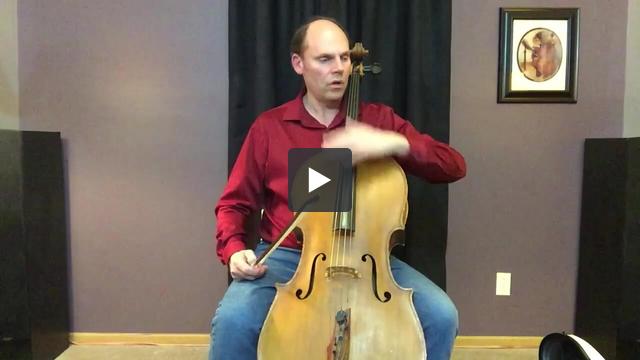
This article looks at the motions necessary for vibrato on the cello. It looks at how cellists often describe the motion and the misconceptions that exist. The goal is a vibrato that is free of tension.

As I have mentioned, we need to understand exactly how our bodies move for a particular motion on the cello so we are better able to teach it and explain it. Vibrato on the cello is a motion that has a great deal of misconceptions.

Sheet Music Plus Featured Sale

One misconception is that the best way to teach cello vibrato is by teaching the "doorknob" exercise. (Ahh! My pet peeve!) This common method says to hold your left arm out and turn your wrist or forearm like you are turning a doorknob. This makes the active motion from the forearm and is sometimes called a "wrist" vibrato. Now, I have never seen a professional cellist or well known cello soloist play a concerto with a "wrist" vibrato! Most who teach the wrist vibrato do not themselves even vibrato that way. It is more a matter of looking more carefully at the actual movement.

Not only does the active motion of cello vibrato not originate with the doorknob motion but the primary motion should originate from the shoulder. Yes, you read correctly, from the shoulder! When I first mention this to students the first thing they thing of is a "chicken wing" motion, where the upper arm rises and falls. But this doesn't take into account the variety of ways our upper arm can move in the shoulder joint. The upper arm can also "swivel" in the shoulder socket. This is the shoulder motion for cello vibrato that I am referring to.

Another way cello vibrato is commonly taught is to teach that the primary active motion is in the forearm with the elbow as a pivot joint (not to be confused with the Doorknob Vibrato). This is similar to the "Door on a Hinge" exercise. This motion is certainly used for vibrato in the upper and lower positions but I do not believe it is the primary active motion. I believe the primary active motion for vibrato in the lower positions should be from the shoulder as the pivot joint, doing a "swivel" motion in the upper arm, with a secondary active motion from the forearm. Try the "Robot Wave" action study and work on feeling the motion from the shoulder. Please see, Teaching Vibrato to Beginning Cellists. It is amazing how much looser the entire left arm feels when vibrato on the cello comes from the shoulder.

One thing to keep in mind is that the vibrato with the elbow as the pivot joint and the vibrato that swivels from the shoulder may look exactly the same. In both cases, the upper arm may swivel in the shoulder joint. However, the difference lies in which is the active motion and which is the passive motion. If you originate the motion in the elbow like the Door on the Hinge, it will usually result in a passive motion in the upper arm. Again, it may look the same but it feels entirely different.

There are other motions involved in cello vibrato but they are all passive motions, not active ones. There is some truth in the doorknob vibrato. The forearm does in fact roll, similar to the doorknob vibrato exercise. Without the forearm motion, the vibrato will get stuck because the energy produced by the shoulder will have no place to go. But I suggest that the forearm not move actively (as in the door knob exercise), but only passively. So the active shoulder vibrato results in a passive forearm roll with in turn results in the finger being able to roll (pivot motion).

Another passive motion in cello vibrato is the hand with the pivot joint in the wrist. Many teachers, whenever they see any hint of "wrist" vibrato, immediately stifle any hand motion. Incidentally, the term "wrist vibrato" can be misleading as it implies that the wrist moves. Remember, joints do not move (please see, It's all about the joints! The Key to a Tension Free Cello Technique). They only serve as pivots for other motions, whether they be active or passive motions. Usually what is meant by wrist vibrato is that the entire forearm does an active motion for vibrato like turning a doorknob with the elbow as the pivot joint. I personally do not advocate this form of vibrato. What I am referring to is a passive motion in the hand with the wrist as a pivot joint. If you adopt a slanted hand position, you hand is in position for this type of motion. I strongly believe in not stifling passive motions (please see Basic Principles of Cello Technique). Passive motions are natural and are only stifled if we tense up the muscles around the joint. It is perfectly natural to allow for some passive motion in the hand with the wrist as the pivot joint in cello vibrato. Also, allowing for passive motions takes work away from the active motions, creating a more efficient motion.

There is one more passive motion in vibrato; the knuckles. Actually, if I want to be more precise, I would say that the pivot joints are the knuckles. Loose knuckles are a great help in keeping the hand loose. If you use a slight slant to the hand, it is easier to have the knuckles be pivot joints.

So go and try it! Practice the action studies and work on feeling the vibrato from the shoulder and passive motions in the forearm, wrist, and knuckles. With time, your vibrato with feel looser and freer.

For ideas on teaching these motions, please see, Action Studies for Beginning Cello.


Unlimited Cello Music Downloads for $37.75 a year


Copyright 2007, CelloProfessor.com
celloprof@yahoo.com
Custom Search